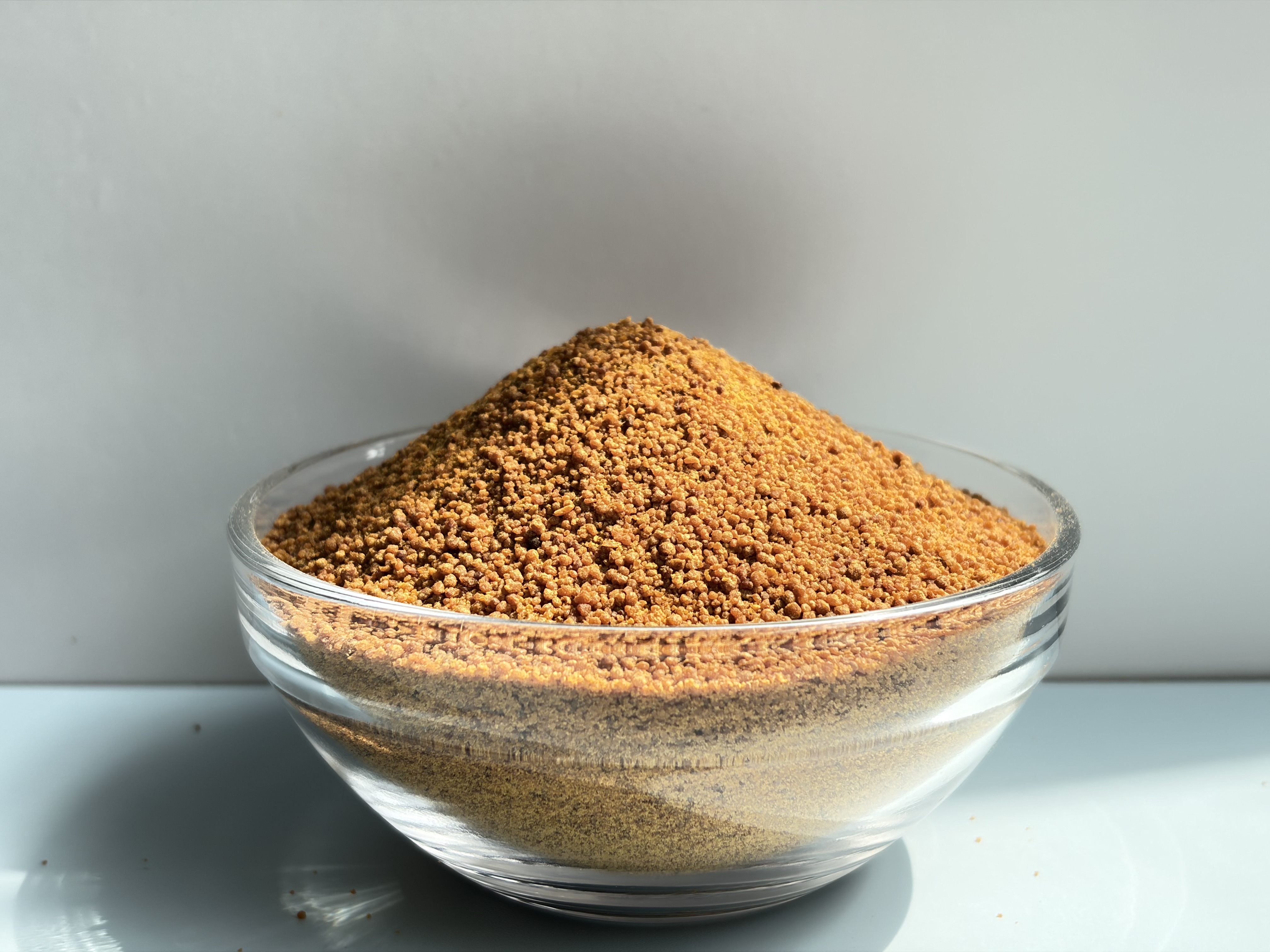
A corn gluten meal certificate of analysis (COA) is the fastest way to judge a shipment before it reaches your mill. It is also easy to misread. Here is the order in which we suggest you read it.
1. Start with crude protein (60% min)
Protein is the reason you buy corn gluten meal. On our specification, CGM is 60% min crude protein. If the COA shows a lower figure, the batch is not the grade you were quoted — whatever the rest of the document says.
2. Then moisture and ash
Moisture tells you how much water you are paying for, and how the batch will behave in storage: a wetter meal is more likely to heat and cake in a container on a long voyage.
Ash is the mineral residue left after everything else is burned off. It is a useful sanity check — a number far away from the one on your agreed specification sheet usually means the raw material or the process was not the one you were offered.
3. Confirm the mycotoxin test (aflatoxin)
CGM is a corn-based ingredient, so a mycotoxin result belongs on the COA. Ask to see the aflatoxin line, along with the method the lab used and its detection limit. A corn product COA without a mycotoxin result is not a complete document.
If your market applies its own limits, check the result against your local regulation before you accept the batch — limits differ between countries, so we do not put numbers into a document that your authority will read.
4. Understand the natural pigment value
Many buyers of CGM for poultry feed also value its natural yellow pigment (xanthophyll), which influences egg yolk colour and broiler skin colour. Pigment level is not always a guaranteed line on a COA.
If colour matters in your formula, say so before you order rather than after the container arrives. It is a specification we can discuss, but only if it is written into the order.
5. Check who signed it
A mill's own internal sheet is not the same thing as a laboratory report. Every shipment we send comes with a COA issued by a professional third-party lab — that is the version your QA team and your local authority can rely on.
6. Ask for a COA for every batch, not a good one from last year
A single certificate from a previous shipment says nothing about the container you are buying today. Make "COA with every batch" one of the order terms, and ask for the COA before loading, not after arrival.