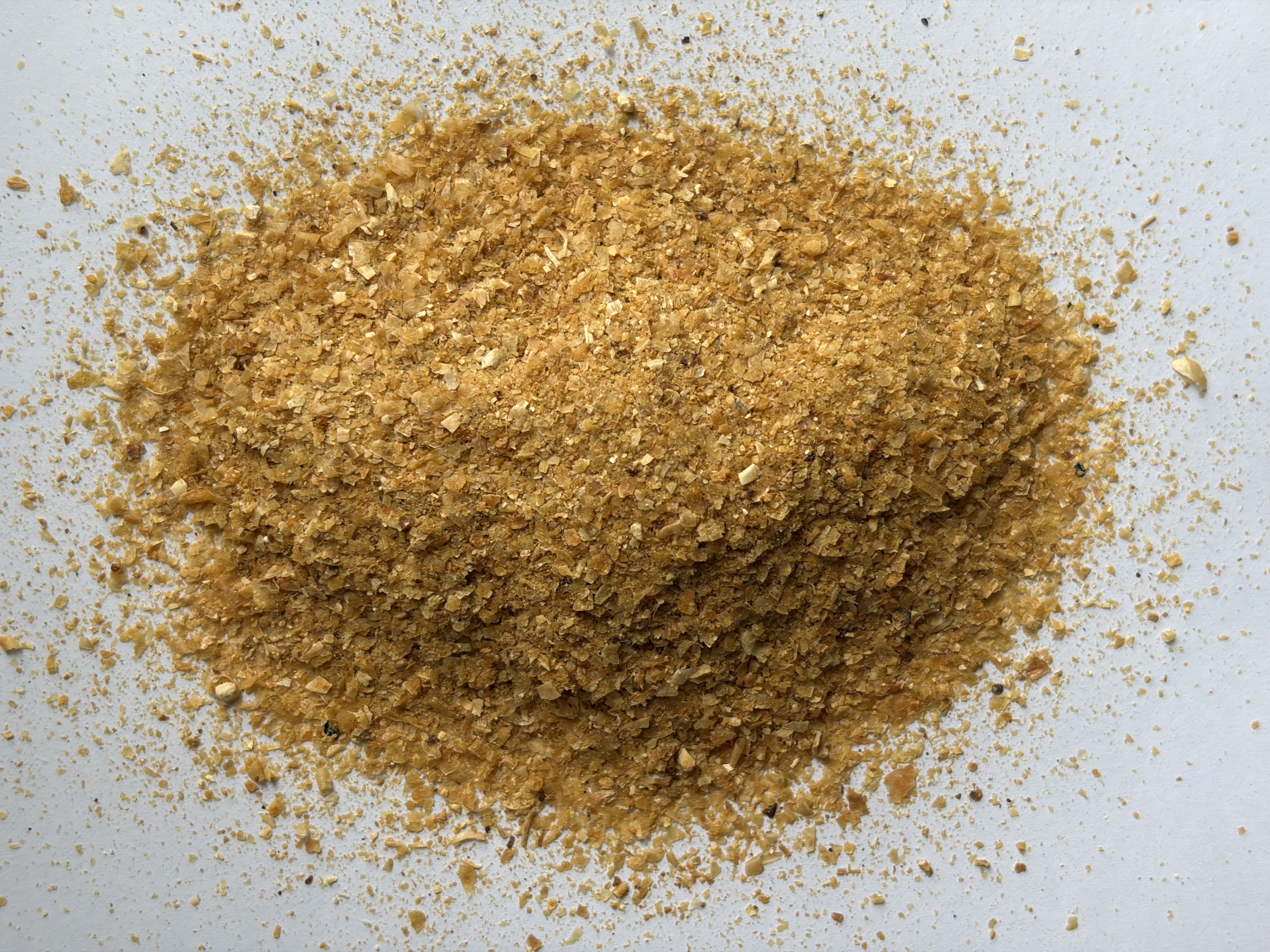
DDGS and CGF both start life as corn and both end up in the ration, but the route each takes through the processing plant leaves them with very different nutrient profiles — and very different jobs.
1. How they are made
DDGS comes out of dry-grind ethanol plants: the whole kernel is fermented, and after distillation the spent grain is dried together with the solubles into a single product. Fermentation and heat concentrate the protein to roughly 26% or more, with a fat fraction high enough to matter in energy accounting.
CGF is the wet-milling counterpart — corn bran, germ and steep liquor solids combined after the starch has been extracted — landing closer to 18% protein, with more fibre and moderate energy. It is the processing route, not the kernel, that separates the two ingredients.
2. When DDGS fits better
Pig and poultry rations are where DDGS usually pays for itself. Its higher protein displaces more soybean meal, its fat replaces part of the added oil, and its digestible amino acid profile is thoroughly documented. In energy-tight formulas, that fat content does real work.
The caveat is variability: ethanol plants run different processes, and the DDGS they ship reflects it. Specification consistency and per-batch certificates matter more with this material than with almost any other corn by-product.
3. When CGF fits better
Ruminants turn CGF's fibre and fermentable energy into performance efficiently, and beef or dairy rations tolerate far higher inclusion levels than monogastric diets ever could. In price-sensitive markets, its lower cost per tonne also stretches ration budgets where protein targets are moderate.
CGF is the feedlot workhorse, not the broiler-starter protein engine. Knowing which job you are buying for is what prevents the usual disappointment when the ration is balanced.
4. What to ask for on the certificate
For either product, request moisture, crude protein, crude fat and crude fibre on every batch, and compare the numbers against the agreed specification rather than the sales sheet. For DDGS, swings in fat and protein move both feeding value and price; for CGF, fibre and moisture decide how much of the bag is actually ration.
Consistency between consecutive batches is a fair proxy for how seriously a supplier runs quality control. Ask to see three recent certificates before committing to volume — it is the cheapest audit you will ever run.