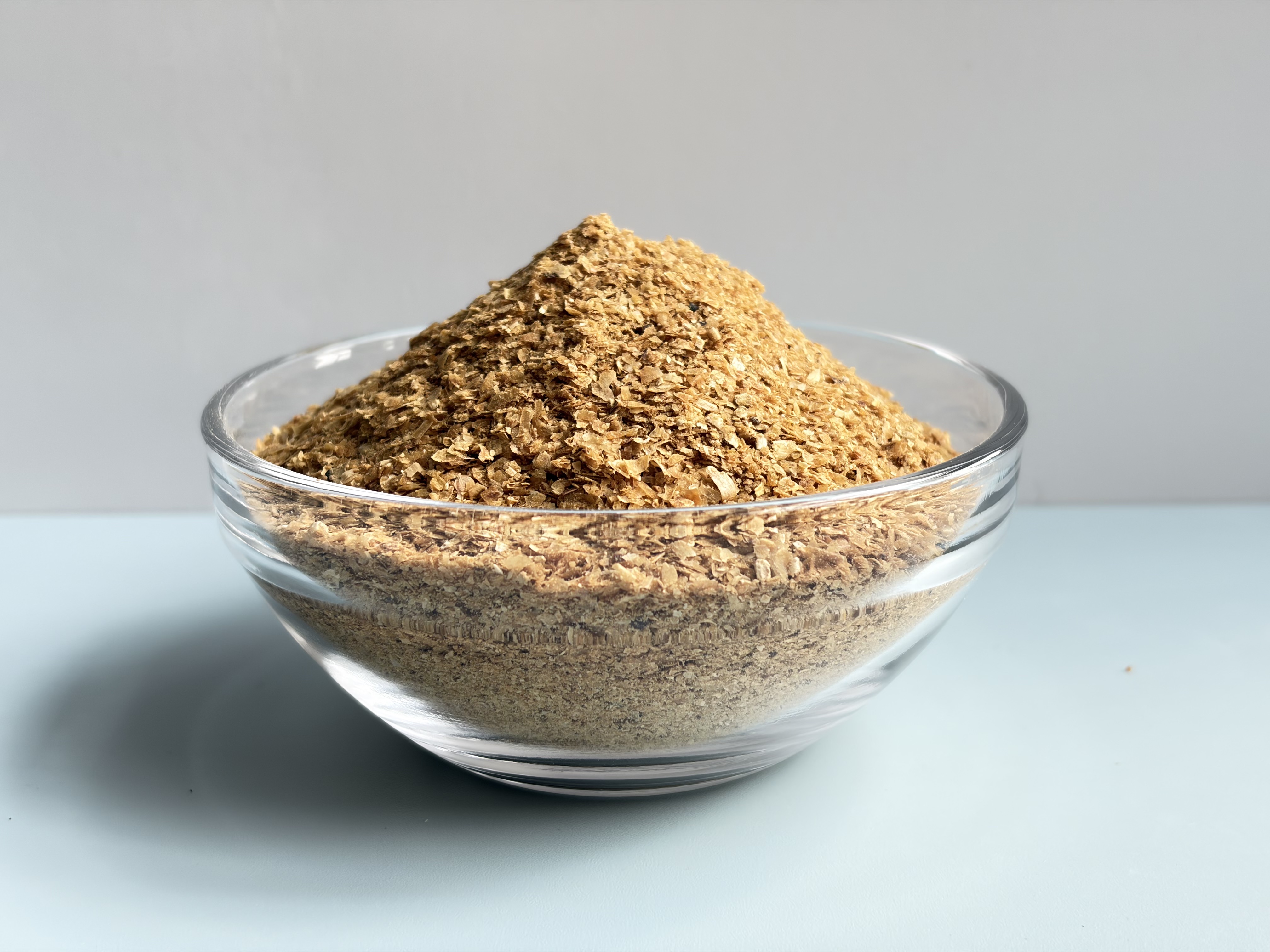
Corn steep liquor powder has quietly become one of the most cost-effective protein sources in modern feed formulation — but only when buyers understand where it fits and what to verify before signing the order.
1. What CSLP is and where it comes from
CSLP is produced inside corn wet-milling plants. During starch separation, the steep water that carries dissolved proteins, amino acids, vitamins and minerals is drawn off, concentrated under vacuum and spray-dried into a free-flowing powder. The finished product typically assays around 42% crude protein, together with useful levels of energy and available phosphorus.
Because it is recovered from the same kernel that yields starch and corn oil, its price follows corn economics rather than the oilseed market — which is exactly why formulators pay attention to it whenever soybean meal prices climb.
2. The honest cost comparison with soybean meal
On a price-per-point-of-protein basis, CSLP is usually the cheaper of the two. But protein is not the whole story: corn steep liquor powder is lower in lysine and threonine than soybean meal, so rations built around it still rely on synthetic amino acids to stay balanced.
Where it genuinely earns its keep is ruminant and aqua feeds, whose digestive systems use its soluble protein and fermentable energy efficiently, and in grower diets where a partial substitution — commonly 3-8% of the formula — trims cost without denting performance. Replacing soybean meal one-for-one is where buyers get disappointed.
3. What to check on a CSLP certificate
A CSLP COA should show crude protein (42% min on our specification), moisture, acidity/pH, crude fibre and microbiological counts. Read the certificate for every batch, not a sample from a previous season: steep liquor chemistry shifts with each run of the mill.
A pH drifting well below the usual range, or fibre creeping upward, are early signs the batch came from a different grade of steep water — both worth a question before the container is accepted rather than after it is unloaded.
4. Storage and handling
The hygroscopic nature that makes CSLP so useful in the mixer also makes it unforgiving in the warehouse. The powder picks up ambient moisture quickly, cakes, and can turn lumpy enough to bridge in handling equipment.
Bag it on pallets, keep it off concrete floors, and hold storage humidity low. For ocean freight, container liners and desiccants are worth the small extra cost — a load that arrives caked costs more to salvage than the desiccant ever did.